First Hour Survival Guide
A focused opening route covering debris, water, food, tools and the first safe raft expansion.
Overview
← Raft Guide Hub · Progression Route (upcoming guide) · Resources (upcoming guide)
Minutes 0 to 10: catch everything
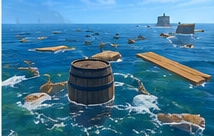
Stay on the starting raft and hook floating debris. Prioritise barrels, planks and plastic, but save palm leaves for rope. Don't chase every isolated object into shark-infested water. A few correctly aimed hook throws generate more resources than risky swimming.
Minutes 10 to 20: build clean water
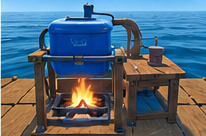
Craft a cup and Simple Purifier and place the purifier where it is easy to reach. Fill it with seawater and turn it into freshwater, then immediately start the next purification cycle. Make this a repeated routine: taking a drink is not the same as replenishing the supply.
Minutes 20 to 35: solve hunger
Build a Simple Grill, fishing rod and a food source such as small crop plots if resources allow. Cook fish rather than relying only on raw food or island fruit. Store spare fish so a long building session does not suddenly become a starvation problem.
Minutes 35 to 50: expand and repair
Craft the Building Hammer, protect key equipment by placing it away from foundations that the shark is chewing, and repair damaged foundations. If the shark attacks, hit it from the raft with a spear. Avoid spending the whole first hour on a large decorative upper deck.
Minutes 50 to 60: choose your next upgrade
Aim for the Research Table, a few storage containers, and the first Collection Nets. The exact timing depends on debris and islands; treat this as a priority order, not a speedrun requirement. Before you explore, place an anchor and check you have food, water and an unbroken hook.
One-hour safety check
You are ready for steady progression if you have renewable water, at least one way to make food, spare materials for a hook and hammer, some storage, and a plan for metal and scrap gathering. If not, stay in the debris stream a little longer rather than rushing the Receiver.
If your first hour goes badly
A slow start is not a failure. If the purifier isn't running, collect planks and plastic before expanding further. If the shark breaks a foundation, prioritise repairs. If food runs short, fish while more water is purifying. If you miss an early island, another will appear as the raft drifts; never abandon your raft to swim after land.
Step-by-step field checklist
- Focus the first debris stream on plastic, planks, palm leaves and barrels.
- Prioritise cup and purifier as soon as materials permit.
- Make a grill and fishing rod, then build a small food reserve.
- Extend foundations modestly, repair shark damage and organise storage.
- Start research and plan Collection Nets after your immediate survival loop is stable.
What to do if progress stalls
Timing varies with debris and island spawns. Treat the hour as a priority framework, not a challenge to execute exact actions on the minute. Water and spare materials matter more than reaching an arbitrary construction milestone.
Preparation and practical takeaway
A good checkpoint is one functioning purifier, a repeatable food plan, spare hook materials, a repair plan and space to store salvage.