Satisfactory Nuclear Power Guide
Plan a reliable Satisfactory 1.2 nuclear power system covering uranium processing, Nuclear Power Plants, radioactive waste and plutonium reprocessing.
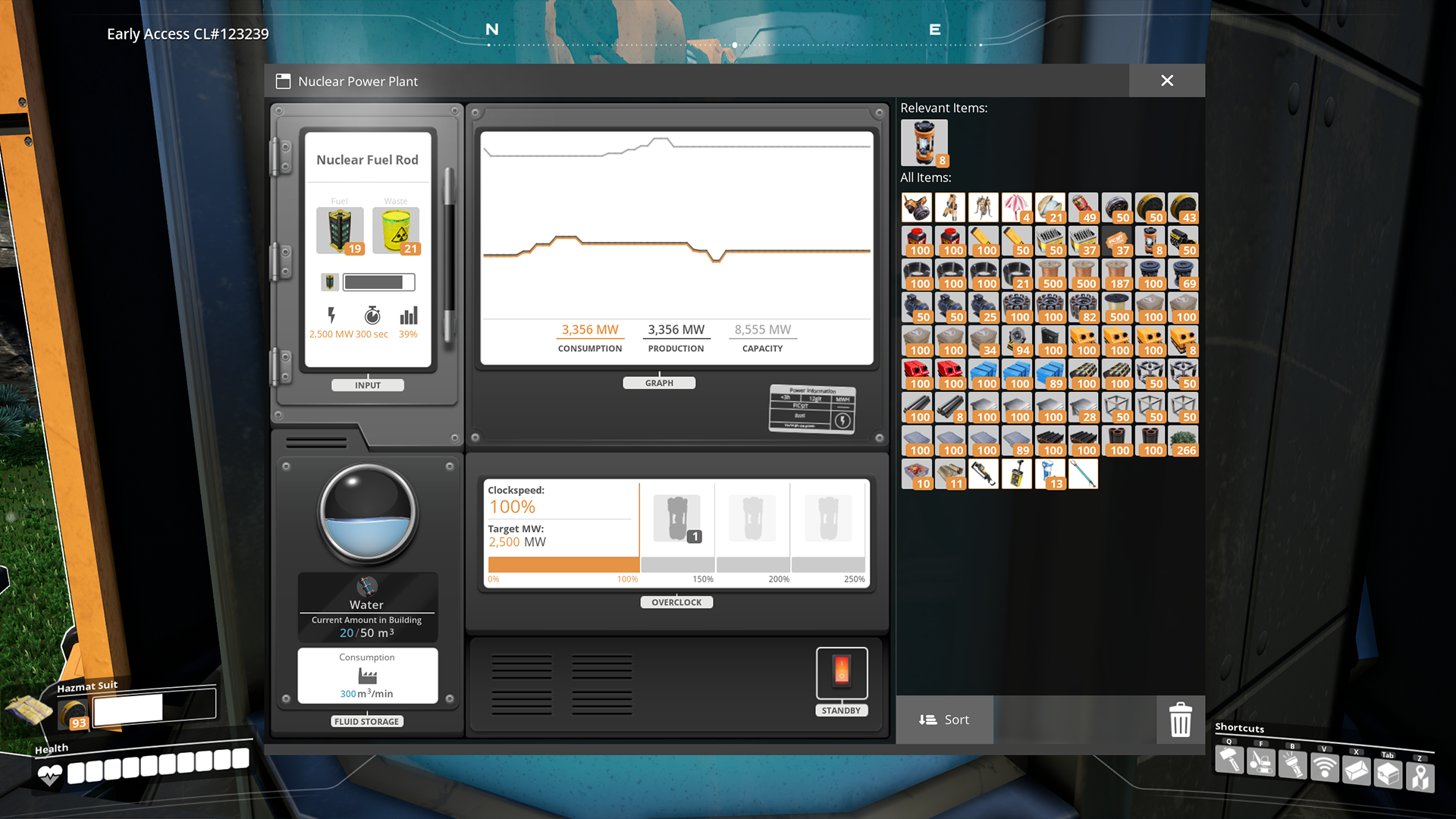
Nuclear power is unlocked in Tier 8 and is a major step up in both output and complexity. A Nuclear Power Plant produces 2,500 MW at 100% clock speed, but the fuel chain is radioactive and burning Uranium Fuel Rods creates Uranium Waste. Build the waste plan before switching the reactors on.
Unlock Nuclear Power
The Tier 8 Nuclear Power milestone unlocks the Nuclear Power Plant and the core uranium processing needed for Uranium Fuel Rod production. Nuclear infrastructure also depends on materials from earlier late-game chains, including aluminium and advanced components.
Uranium processing
The standard Encased Uranium Cell recipe uses Uranium, Concrete and Sulfuric Acid in a Blender. It also returns part of the Sulfuric Acid as a byproduct, so the fluid loop should be planned rather than treated as an inconvenient pipe discovered after construction.
Reactor requirements
At 100% clock speed a Nuclear Power Plant produces 2,500 MW, consumes 240 m³ Water/min and burns 0.2 Uranium Fuel Rod/min. One Uranium Fuel Rod therefore runs a reactor for 300 seconds and produces 10 Uranium Waste/min.
Plan the entire chain before startup
Nuclear is not a system to commission one machine at a time while hoping the missing materials appear. Confirm Uranium extraction, Sulfur and Sulfuric Acid, Encased Uranium Cells, fuel-rod components, water delivery and waste handling before feeding the first reactor.
Uranium Waste cannot be ignored
Uranium Fuel Rods create Uranium Waste when consumed. The waste is radioactive and cannot be sent directly to an AWESOME Sink. Provide isolated storage with substantial capacity or progress into Tier 8 Particle Enrichment and process the waste into the plutonium chain.
Plutonium as a waste-management route
Particle Enrichment allows Uranium Waste to be reprocessed into Plutonium Fuel Rods. Plutonium Fuel Rods themselves can be sent to the AWESOME Sink instead of being burned, allowing the uranium-power chain to dispose of the reprocessed material without creating Plutonium Waste. If a Plutonium Fuel Rod is burned, a reactor consumes 0.1 rod/min and produces 1 Plutonium Waste/min.
Tier 9 adds Ficsonium
Later Tier 9 progression provides Ficsonium Fuel Rods as another nuclear option. A reactor burning Ficsonium produces no nuclear waste, but the supporting production chain is an endgame system rather than a requirement for a first nuclear plant.
Keep radioactive logistics isolated
Build the nuclear complex away from heavily travelled production areas where practical. Keep radioactive materials on dedicated logistics routes and minimise unnecessary storage.
Scale after one complete line works
Get a small, complete nuclear system running reliably before multiplying it. A beautifully symmetrical twenty-reactor complex is less impressive when its first sulfur delivery fails and the entire thing becomes a glowing monument to premature scaling.
One-reactor commissioning example
At standard 100% clock speed, one Nuclear Power Plant produces 2,500 MW, consumes 0.2 Uranium Fuel Rod/min and 240 m³ Water/min, and generates 10 Uranium Waste/min. One Uranium Fuel Rod burns for five minutes. Two standard Water Extractors can supply the reactor's 240 m³/min water demand when properly connected, although their 40 MW combined power draw and any pumps must be counted in the supporting infrastructure.
Minimum ongoing requirements
- Fuel supply: 0.2 Uranium Fuel Rod/min, equivalent to one rod every five minutes.
- Water delivery: 240 m³/min, with enough head lift to reach the reactor input. This fits within one Mk.1 Pipeline's 300 m³/min nominal limit.
- Waste removal: 10 Uranium Waste/min, routed to a dedicated, powered handling system with a defined long-term destination.
- Grid reserve: start supporting pumps, water supply and upstream fuel production before relying on reactor output.
Why you need a waste decision before switching on
At 10 Uranium Waste/min, one operating reactor produces 600 Uranium Waste per hour. Temporary storage can delay a jam, but does not solve it. Uranium Waste cannot go directly into an AWESOME Sink. If the conveyor output backs up, the reactor eventually stops when its waste output is blocked.
For a long-term uranium-power chain, plan a route that converts Uranium Waste into Plutonium Fuel Rods and sends those completed fuel rods to an AWESOME Sink. Do not burn the Plutonium Fuel Rods if the goal is to avoid generating Plutonium Waste. The rods can be sunk; Uranium Waste and Plutonium Waste cannot.
When a reactor stops or won't start
- No power generated: check Uranium Fuel Rod supply and the reactor's Water input; remember that water and fuel production equipment require their own initial power.
- Water runs dry: verify the 240 m³/min steady input, the pipe's throughput and elevation/head lift, and whether other consumers share the feed.
- Reactor gradually stops after a successful startup: inspect the Uranium Waste belt and destination storage or reprocessing facility.
- Water supply is fine but the grid is unstable: calculate consumption from upstream fuel production, extractors and pumps and retain a healthy reserve.
Example only: these verified rates are calculated from standard recipes and reactor fuel consumption. This is not a tested downloadable layout. Sources: Nuclear Power Plant, Uranium Waste, Plutonium Fuel Rod and AWESOME Sink on the official Satisfactory Wiki.
Continue to endgame planning
Next: Late-Game & Endgame Factory Guide (forthcoming) · Aluminium Production Guide